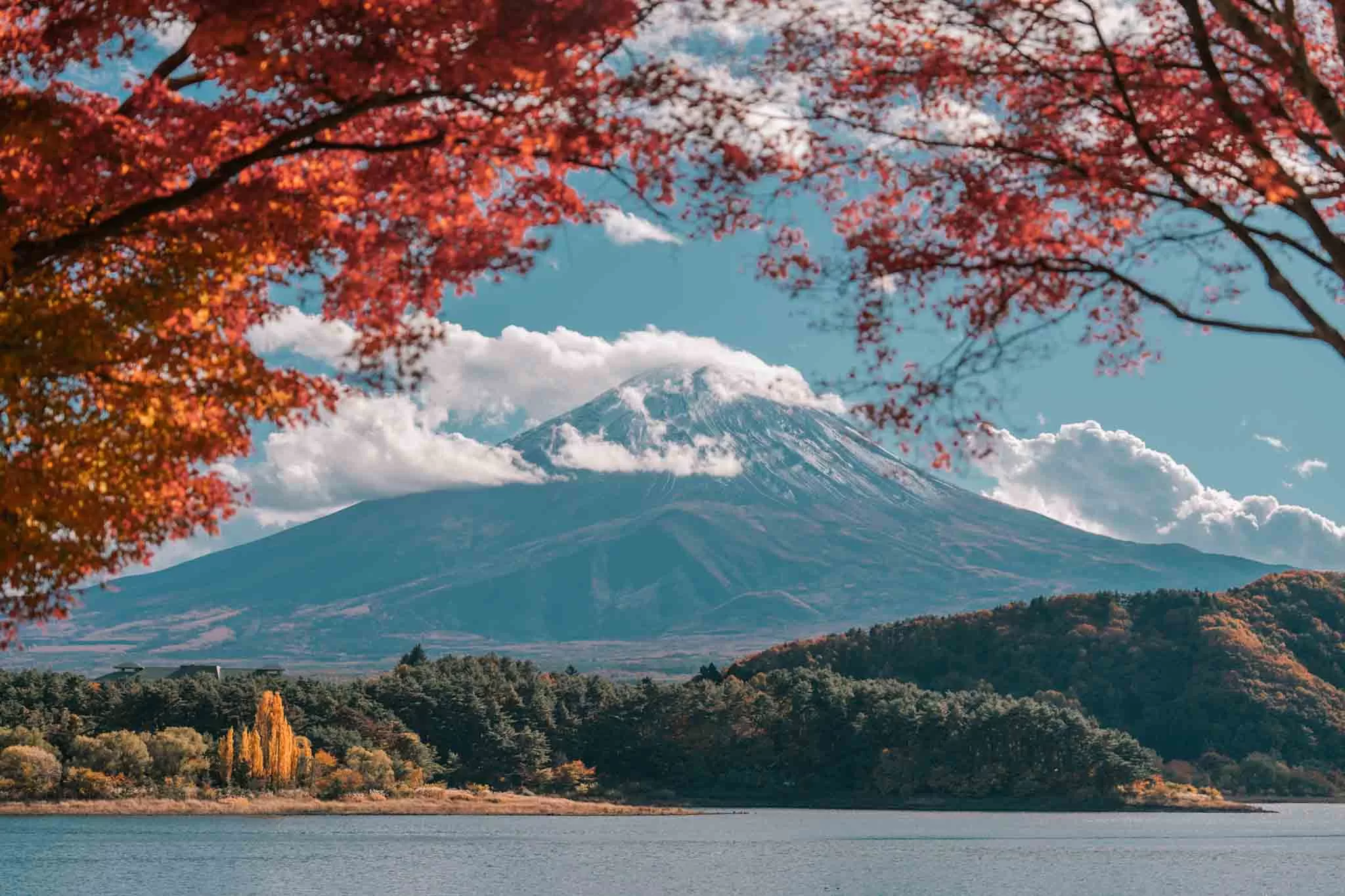
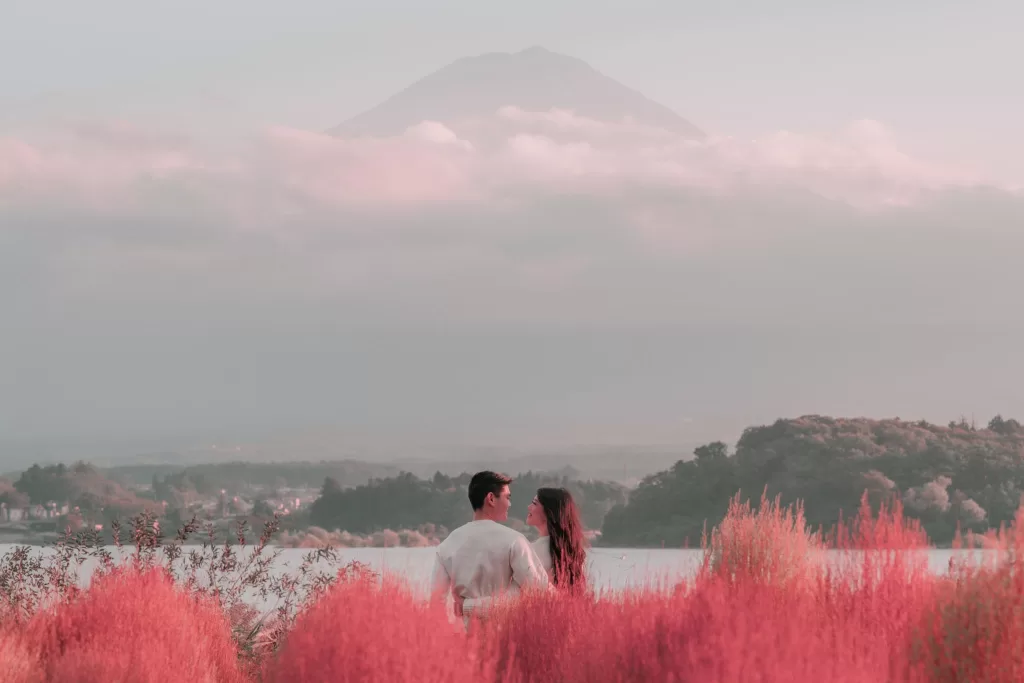
Mt. Fuji is hands down one of our favorite places in the world. We make a point to visit every single time we go to Japan, and it’s one of those places we truly never get tired of seeing.
When it’s clear, it’s honestly unreal. No matter where you are, whether it’s a lake, a small street, a café, or even the train, Mt. Fuji turns into the perfect backdrop. It makes everything feel more magical, more peaceful, and way more memorable.
But here’s the honest part: Fuji can be cloudy, crowded, and tricky to plan around if you don’t know what to expect.
This guide is all about helping you:
- Increase your chances of actually seeing Mt. Fuji
- Avoid the mistakes we made on our first few trips
- Still have a great time even if Mt. Fuji is covered by clouds!
Check out our Mt. Fuji Guide: What to See, Eat & Do to plan your visit with practical tips, must-see spots, and food stops you won’t want to miss.
Just a heads up: Some of the links on this site are affiliate links, which means we might earn a small commission if you book or buy through them at no extra cost to you. We only share things we genuinely love, use, or would recommend to our closest friends. All opinions are 100% our own.
Overview
- Before You Go: The 30-Second Planning Checklist
- Section A: Getting Around Mt. Fuji
- Section B: The Biggest Challenge – Visibility & Weather
- Section C: Have a Plan Even If Mt. Fuji Hides
- Section D: Bonus Ways to See Mt. Fuji
- Section E: Timing is Everything
- Final Thoughts
Before You Go: The 30‑Second Planning Checklist
✔ Pick your season (snowy peak, cherry blossoms, fall colors, etc.)
✔ Decide north vs south Mt. Fuji (or both)
✔ Book flexible hotels + car rental
✔ Save 2–3 backup activities for cloudy days
✔ Plan to start early + go on weekdays if possible
✔ Organize your itinerary by area – check out our best Mt. Fuji spots (blog coming soon!)
✔ Check the forecast by location a few days before your trip
Section A: Getting Around Mt. Fuji
Tip #1: Rent a Car (It Makes Everything 10x Easier)
Why it matters
Mt. Fuji spots are spread out. A lot of the best viewpoints, lakes, cafes, and parks aren’t close to each other, so you’ll end up spending a lot of time getting around if you don’t plan.
Public transportation in the area is mostly buses (no metro system), and they can be slow and inconvenient if you want to hit multiple spots in one day.
What to do
Rent a car. It gives you full freedom to:
- Chase Mt. Fuji views with clear skies
- Change plans last minute
- Visit more spots in less time
🚙 Tip: You can book a car rental with Trip.com here!
When you pick up your car, make sure you ask for an ETC card (toll card for cars).
- Cost: about 330 yen (~$2 USD)
- It lets you go roll through toll gates slowly without stopping to pay; otherwise, you will have to stop and wait to pay at each toll gate, which can take 10-15 minutes (you’ll hit a lot just between Tokyo and Mt. Fuji)
Budget heads‑up (Car tolls can get expensive)
Tolls in Japan can add up fast, especially over long distances.
We’ve always spent more on tolls than on gas around Mt. Fuji. Not a deal breaker, just something to budget for so it doesn’t surprise you.
Ex: We spent over $100 on tolls on our last Mt. Fuji trip, and around $70 for gas.
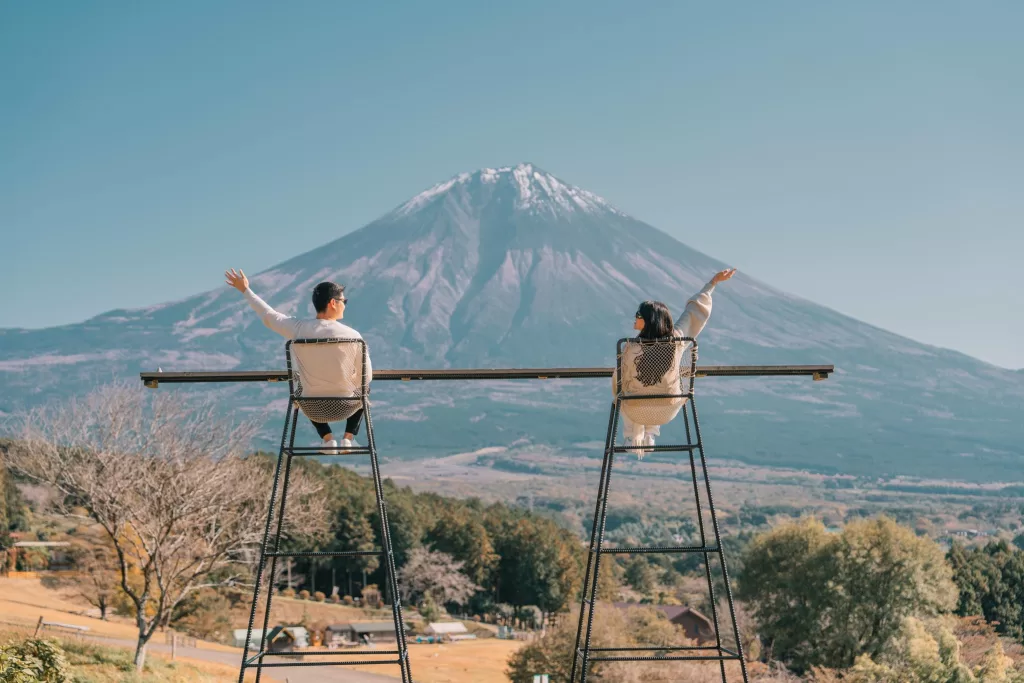
Section B: The Biggest Challenge – Visibility & Weather
Tip #2: Mt. Fuji Is Cloudy A LOT (So Plan Like It Is)
Reality check
Mt. Fuji is only fully visible around 100 days a year (if that lol).
You can plan everything perfectly and still get clouds. Your goal should be to plan for Mt. Fuji with as few cloudy times as possible.
Best months to visit (by vibe)
🏔️ Want the iconic snowy peak?
→ Winter (Dec–Feb) and early spring or late autumn
🌸 Want cherry blossoms + Fuji?
→ Late March to early April (beautiful, but often cloudier)
🍂 Want fall colors?
→ October to mid-November (amazing combo of red leaves + Fuji)
❌ Season to avoid (if you can): Summer (July–August)
→ Hot and humid, often cloudy, no snowy peak, no cherry blossoms or fall leaves, and still very busy since a lot of people travel to Japan during the summer
Also, keep in mind that many flower parks around Mt. Fuji only bloom for a few weeks, so timing matters a lot.
Where to check the forecast
Don’t just search “Mt. Fuji weather”. One of the most important Mt. Fuji viewing tips is to check the exact side you’re visiting by day. Mt. Fuji might be covered in clouds in the south and completely clear in the north.
We also recommend starting to monitor the forecast at least a week in advance, and keep checking daily as your trip gets closer. The weather can change quickly, and tracking it over time helps you spot clearer days and adjust plans if needed.
Use these areas as a rough guide, then check the exact locations of the spots you plan to visit for the most accurate forecast.
- North side: Fujiyoshida
- South side: Fuji
- West side: Fujinomiya
- East side: Yamanakoko
💡 Bonus tip: Check the live Mt. Fuji camera
If you want to know what Mt. Fuji looks like right now on the day you’re visiting, you can also check the live camera feed from different viewpoints around the mountain.
It shows real-time conditions, so you can quickly see if the mountain is clear, partly cloudy, or totally hidden before heading to a spot. Super helpful for deciding whether to go straight to viewpoints or switch to a backup plan!
Tip #3: Book Cancellable Hotels (Or Book Last‑Minute)
Why
Mt. Fuji trips are very view‑based, and the weather changes fast.
If it’s going to rain for two days straight, you probably don’t want to lock yourself into expensive non‑refundable plans.
What to book
- Hotels with free cancellation
- Car rentals with flexible cancellation
If your schedule allows, last‑minute bookings work great too. Make sure to start checking the weather around Mt. Fuji at least a week before you intend to visit!
Where to stay near Mt. Fuji
We recommend staying in Fujiyoshida, especially near Lake Kawaguchiko.
It’s one of the best bases for:
- Classic Fuji views
- Popular photo spots
- Early morning access
Recommended hotels
Around Lake Kawaguchiko (Fujiyoshida area): These give you the best access to classic Fuji views and popular photo spots.
- QOO HOUSE (Airbnb): Dome house glamping with superb Mt. Fuji and Lake Kawaguchiko views.
- Fujikawaguchiko Onsen Konanso: Traditional ryokan with Mt. Fuji views and rooftop onsen overlooking Lake Kawaguchi.
- Fuji Onsenji Yumedono: Ryokan-style hotel with private in-room onsen baths.
- Mizno Hotel: Hillside boutique hotel with Mt. Fuji views from all rooms and a rooftop onsen.
South of Mt. Fuji: Good option if Lake Kawaguchiko is fully booked or you’ve already seen the north side of Mt. Fuji.
- edit x seven FUJI GOTEMBA: A modern stay with Mt. Fuji views from higher floors.
- Kyukamura Fuji: Peaceful lakeside hotel by Lake Tanuki with rooms facing Mt. Fuji.
East of Mt. Fuji: Quieter, more secluded. Great if you want to avoid crowds.
- Mt Fuji View and Private Sauna Ryokan Shizuku: A cozy ryokan with Mt. Fuji views and a private in-room sauna.
- VISION GLAMPING Resort & Spa Yamanakako: Lakeside glamping resort at Lake Yamanaka with private cabins and stunning Mt. Fuji views.
Section C: Have a Plan Even If Mt. Fuji Hides
Tip #4: Stay Overnight for the Best Chance to See Fuji
Why it works
☀️ Mt. Fuji is usually the clearest early in the morning, so we highly recommend staying at least one day overnight!
Staying nearby lets you:
- Wake up early to Mt. Fuji views (with your best chance for clear skies!)
- Beat the crowds
- Avoid the long commute from Tokyo
Hotel pro tip
🏔️ Book a Mt. Fuji view room if you can!
Fuji is huge and open, so lots of hotels have great views. Seeing it right when you wake up hits different.
💡Hotel recommendations: Here’s a list of places we recommend!
Tip #5: Always Have Backup Plans
Because yes… sometimes Fuji just says “not today”.
And you don’t want to spend your whole day refreshing the weather app in a parking lot.
Our favorite backup ideas
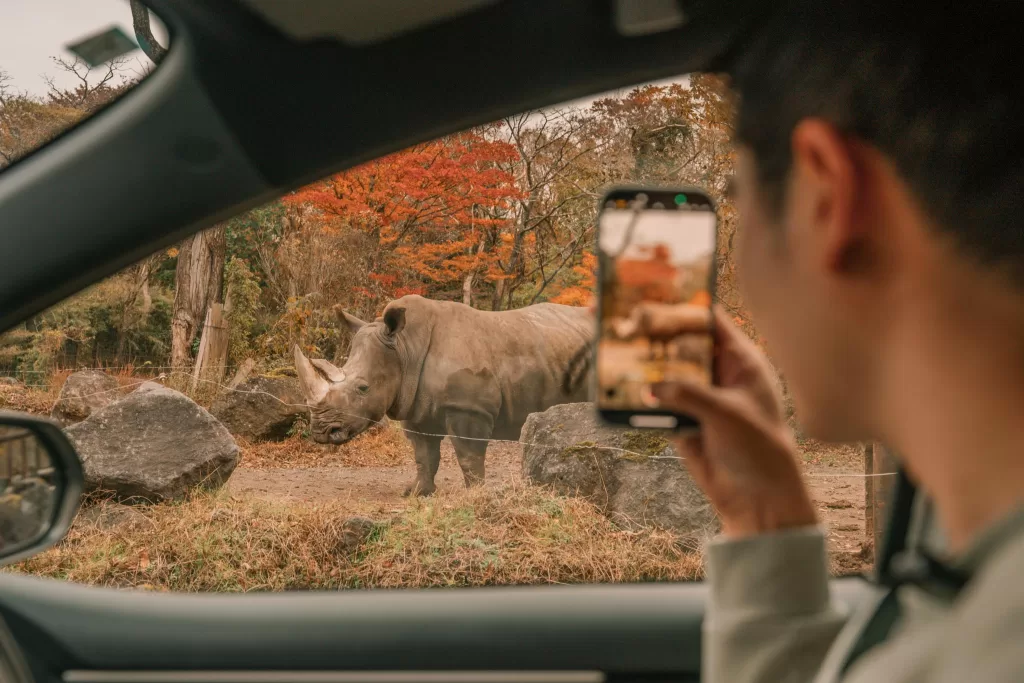
🦁 Fuji Safari Park – A drive‑through style zoo where animals roam freely. Super unique and fun. 👉 Be sure to check the Fuji Safari Park website for safety guidelines and key details if you’re driving a car.
🎢 Fuji‑Q Highland -Insane roller coasters with Fuji views on clear days. Even on cloudy days, it’s still a blast. Get your day pass here! For priority access, arrive early to buy a priority pass at the entrance.
🍁 Maple Corridor (if it’s in season) – Only in autumn, but absolutely stunning when the leaves turn red. Even without Mt. Fuji, it’s worth visiting.
💧 Shiraito Falls – One of the most beautiful waterfalls in the area. Easy walk, refreshing, and great year-round.
✨ Pro tip: We recommend getting an eSIM with Holafly so you have data on the go (use code HELLOANG for 5% off). When Mt. Fuji hides behind the clouds, instant internet makes it easy to search nearby spots, adjust plans, or navigate to a backup location without relying on café Wi Fi.
Section D: Bonus Ways to See Mt. Fuji
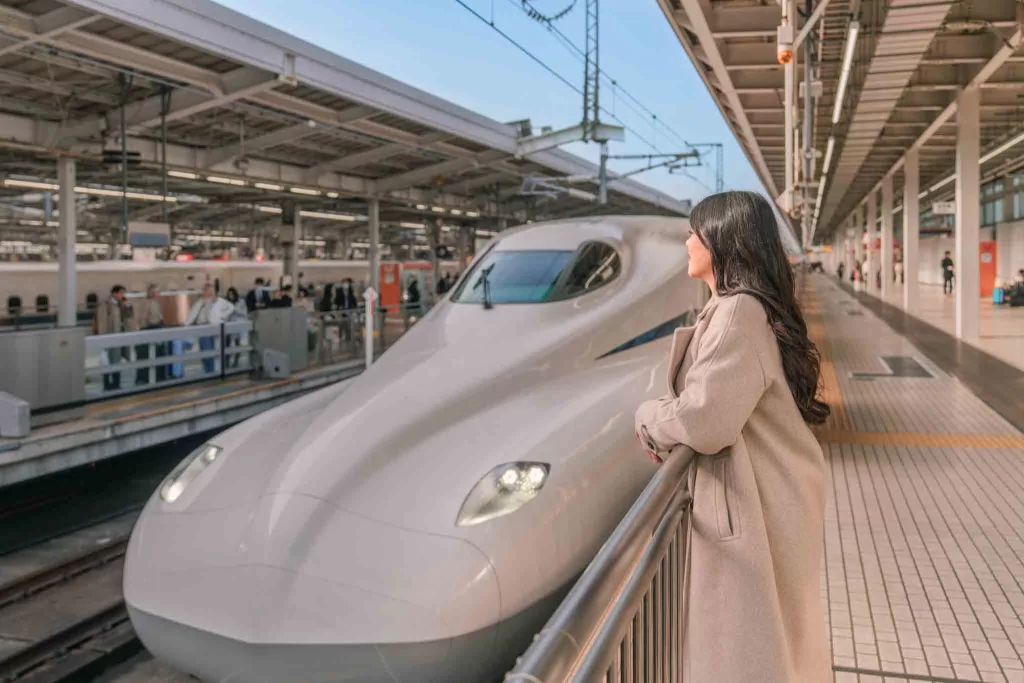
Tip #6: Book a Mt. Fuji View Shinkansen Seat
🚅 If you’re traveling between Tokyo and Kyoto/Osaka, this is a great opportunity to see Mt. Fuji.
You don’t get many chances to see Mt. Fuji during a Japan trip, so take it when you can.
What to do
- Book a Shinkansen seat with a Mt. Fuji view
- Klook offers this option when booking tickets!
It’s quick, but when you catch it on a clear day, it’s magical ✨
Section E: Timing Is Everything
Tip #7: Choose Your Season Wisely
Best overall:
🍁 October – November (fall) → fall foliage + beautiful Mt. Fuji views and chance for snowy peak during late fall
❄️ December–February (winter) → best chance to see the iconic snowy peak + generally less cloudy
Best overall:
🌸 March–April (spring) → iconic cherry blossoms BUT higher cloud chances
Worst:
🚫 July–August (summer) → hot, humid, crowded, and usually cloudy with no snowy peak or seasonal colors
💡 Tip: A lot of flower fields only bloom for a couple of weeks, so timing your visit really matters
Tip #8: Be Patient – Clouds Can Move Fast
Sometimes Fuji is hidden…
…and 10 minutes later it’s fully out.
Don’t panic‑leave right away. If the sky isn’t completely covered and you see clouds moving, give it some time! We’ve seen it clear up more times than we can count.
BUT if the entire sky is covered in clouds, and the weather app doesn’t say it’s going to change, you should probably start looking for other things to do that don’t require Mt. Fuji views or look at the weather in different directions of Mt. Fuji for other spots that might be available.
Tip #9: Go Early to Popular Photo Spots
Especially these:
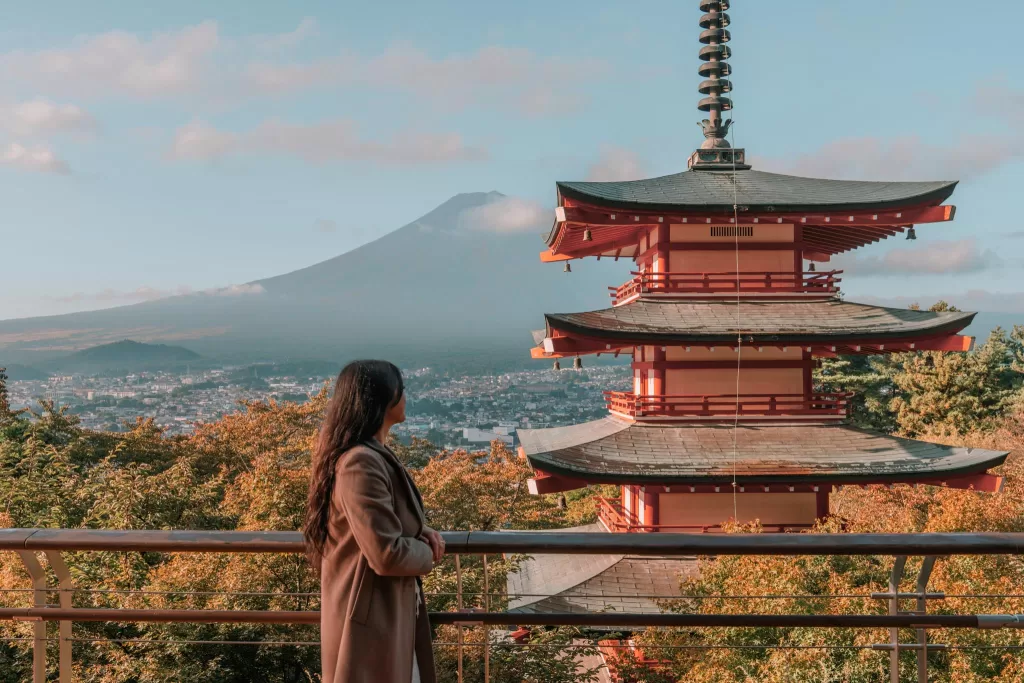
- 🏯 Arakurayama Sengen Park (Chureito Pagoda) – The iconic pagoda + Mt. Fuji view you see everywhere. Tons of stairs, even more people.
- 🌸 Oishi Park – Lakeside flower park with Mt. Fuji in the background. Super pretty and super crowded during the blooming seasons. You can also book this tour that covers all the must-visit viewpoints of Mt. Fuji if you only want a day trip from Tokyo!
- 🌉 Fujisan Yume No Ohashi Bridge – A modern pedestrian bridge lined up perfectly with Mt. Fuji for photos. This bridge has gotten so popular that they have staff to direct the queue.
- 🚡 Mt. Fuji Panoramic Ropeway – Cable car up to a viewpoint over Lake Kawaguchi and Fuji. A short ride, but it can have long lines going up and down. Grab your ticket here!
- 🏘️ Oshino Hakkai – Traditional village with clear spring ponds and street food. It has narrow paths that get packed quickly with tourists, locals, and tour groups.
Simple strategy: Go early, get your photos first, then relax with food and cafés after. Your photos will be better, wait times will be shorter, and your stress level will be way lower.
Tip #10: Visit on Weekdays
Mt. Fuji spots are busy almost all the time.
But weekends can be significantly busier since you’ll be seeing more tourists and locals who have the day off.
If you can, go on weekdays, especially Tuesday to Thursday, for:
- Fewer tour buses
- Shorter waits
- Easier parking
- Cleaner photos
Final Thoughts
Mt. Fuji is one of those places that’s 100% worth the effort… as long as you plan smartly.
It’s not the kind of destination where you just show up and hope for the best. The weather changes fast, the crowds can be intense, and the best viewpoints take a little strategy. But it’s unforgettable when everything lines up, and you see Mt. Fuji clearly.
Quick recap of this blog:
🚗 Rent a car so you can move freely and chase clear skies
🏨 Book flexible stays in case the weather shifts
🌤 Check the forecast for the exact side of the mountain
🌅 Start early for the best visibility
📅 Go on weekdays to avoid the worst crowds
And most importantly, don’t stress if Mt. Fuji hides at first.
If you’re short on time, don’t feel comfortable driving, or want a more relaxed way to see Mt. Fuji in one day, there are some really good tour options too:
💡 Private customizable car tour: a private chartered day tour that lets you choose your stops, adjust plans, and spend as much (or as little) time as you want at each scenic spot.
💡 One-day bus tour from Tokyo: a straightforward way to see Mt. Fuji highlights without worrying about logistics, navigation, or timing. You can just sit back, enjoy the views, and focus on the experience.
Some of our best memories here came from waiting it out, changing plans at the last minute, or discovering a new spot we hadn’t planned on. Even on cloudy days, the lakes, small towns, food, and onsen around Mt. Fuji are still beautiful and worth your time.
So plan well, stay flexible, and enjoy the process. Seeing Mt. Fuji clearly feels extra special when you know you earned it a little 🤍
– Angelia & Chris