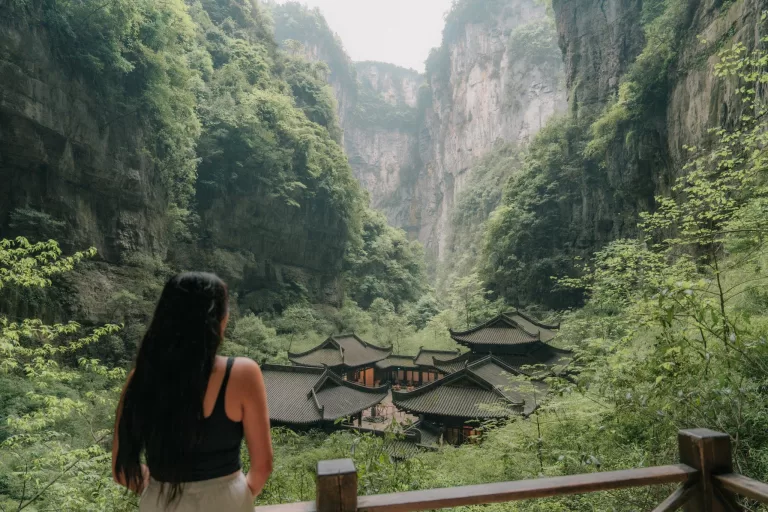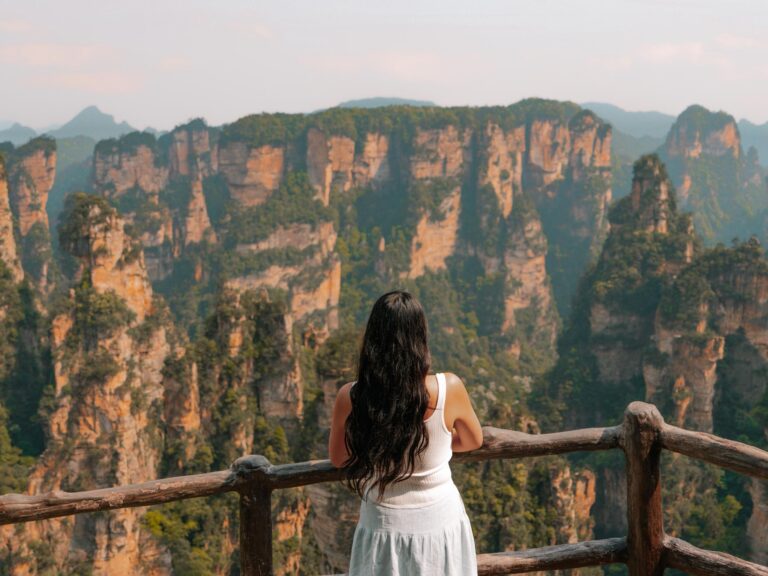

A UNESCO World Heritage Site tucked in the karst mountains of Chongqing, Wulong Karst National Geology Park is a surreal landscape of giant limestone bridges, sinkholes, and caves. From cinematic cliffs to underground rivers, it’s one of China’s most underrated natural wonders. Here’s everything you need to plan your trip to this dramatic destination.
Planning your first trip to China? Be sure to check out our 10 Essential China Travel Tips (2025 Guide) or 2-week China itinerary here. They’re packed with everything we wish we knew before going!
Just a heads up: some of the links on this site are affiliate links, which means we might earn a small commission if you book or buy through them—at no extra cost to you. We only share things we genuinely love, use, or would recommend to our closest friends. All opinions are 100% our own.
Bonus: Use code ANGKLOOK or ANGELIAKLOOK on Klook for 10% off if you’re a new user, or for 3% off if you’re an existing one for all of the Klook links!
Overview:
- Getting to Wulong
- How to Get Around Wulong
- Where to Stay in Wulong
- Recommended Hotels
- How Long to Stay in Wulong
- Top Things to Do
- What to Eat in Wulong
- Best Time to Visit
- Where to Shop
- General Tips for Visiting Wulong
- Final Thoughts
✈️ Getting to Wulong
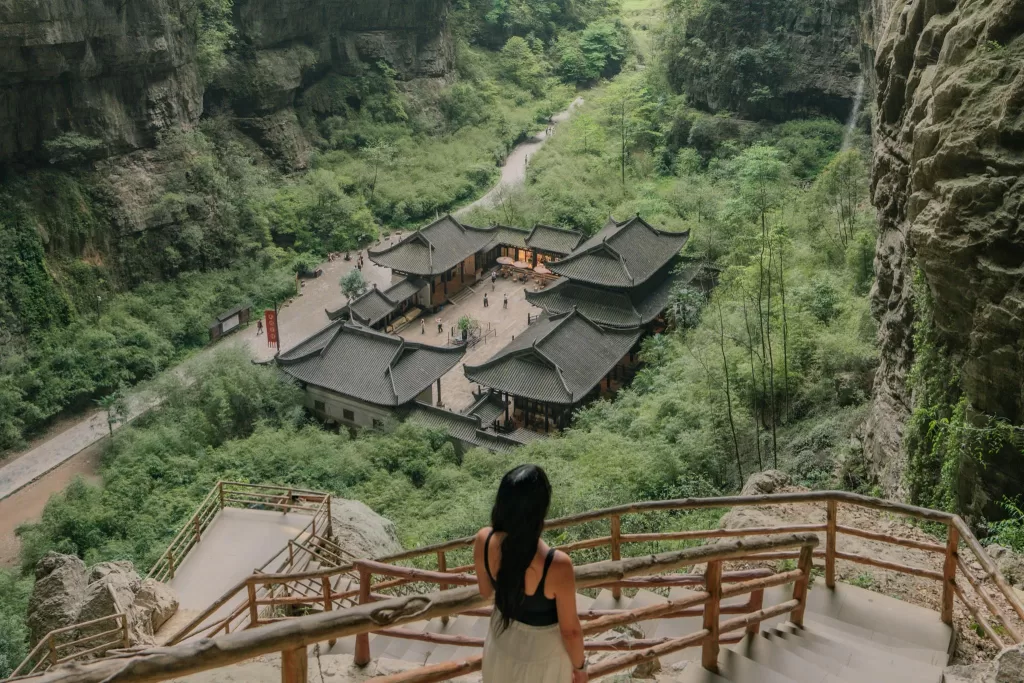
Wulong is most easily accessed from Chongqing and can be reached by high-speed train, private car, or long-distance bus. Whether you’re looking for speed or scenic views, here are the best ways to get there.
| Mode | Details |
| By Train 🚄 | Take a high-speed train to Wulong Railway Station from Chongqing North Station (~2 hours). From there, it’s a 30–40 min taxi or shuttle to the scenic areas. |
| By Car 🚗 | You can hire a private car or take a long-distance bus from Chongqing Longtousi Bus Station to Wulong (~3–4 hours). Best for flexibility and scenic views. |
| By Air ✈️ | Wulong has a small airport, Chongqing Xiannüshan (CQW), about 20 km from town. It offers limited domestic flights (mainly to Beijing and Guangzhou), making it unreliable for most travelers. |
🚗 How to Get Around Wulong
Wulong is relatively easy to get around with a combination of park shuttles, local buses, and Didi taxis. Whether you’re arriving by train or heading to the scenic areas, here’s what you need to know to move around efficiently and avoid common tourist pitfalls.
- Scenic Area Shuttle Buses – Tickets to Three Natural Bridges and Longshuixia Gap must be purchased at the Wulong Tourist Center, which is also where the park shuttle buses for both leave from.
- Didi (Taxi) – The easiest way between the train station and Tourist Center, but drivers often ask for an extra 20–30 RMB due to the steep road. If overcharged (e.g. 200 RMB), decline and order another ride to see if another will have one cheaper.
- Local Bus from Wulong Train Station: A public bus runs from Wulong Train Station to the Tourist Center for just ¥10, and the stop is right outside the station.
- On Foot: Trails within the scenic areas involve stairs, bridges, and tunnels—wear good hiking shoes and be prepared for some steep, uneven terrain.
🏨 Where to Stay in Wulong
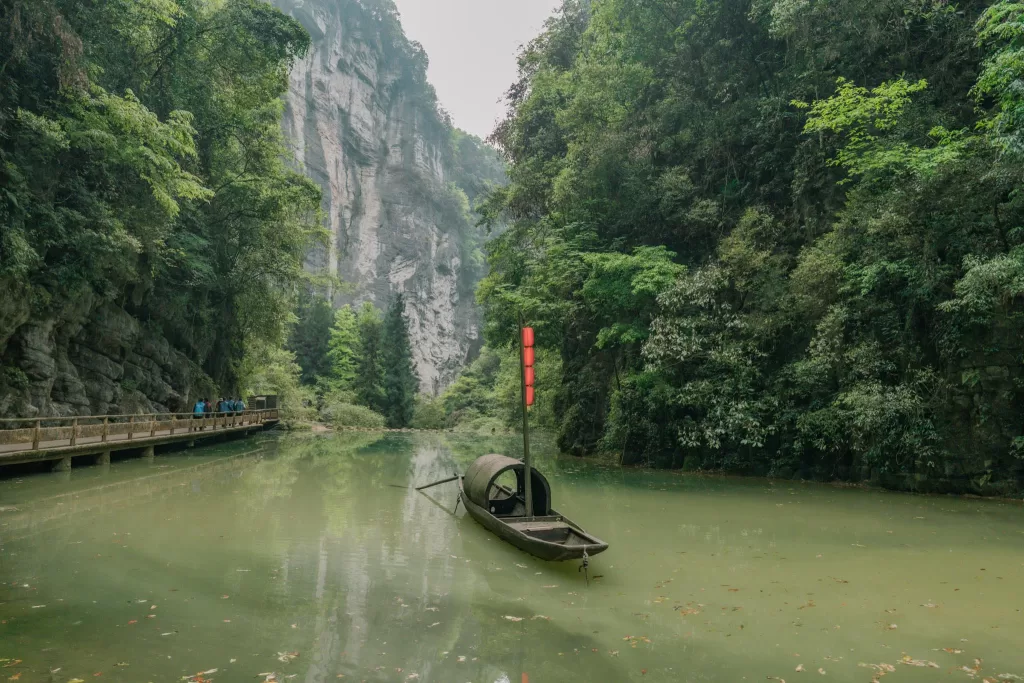
Wulong offers a mix of rustic charm and modern comfort. Where you stay can shape your experience—here’s how to choose the right base:
- 🌁 Near Xiannü Town (仙女镇): The most convenient area near the entrance to the Three Natural Bridges and most shuttle buses. You’ll find a mix of hotels and guesthouses here.
- Best for: First-time visitors, ease of access, sunrise hikes.
- Best for: First-time visitors, ease of access, sunrise hikes.
- 🏞 Inside the Scenic Area (limited options): A few eco-lodges and local inns exist within walking distance of the trailheads, offering early access and peaceful surroundings. Book early, especially in peak season.
- Best for: Nature lovers, early risers, photographers.
- Best for: Nature lovers, early risers, photographers.
- 🏙 Wulong Town: Located ~30–40 minutes from the park. Offers more dining options, convenience stores, and local life. A better option if you want more amenities and don’t mind a commute.
- Best for: Budget travelers, local culture, longer stays.
🛏 Recommended Hotels
- No. 187, Gingko Avenue – Spacious, apartment-style rooms with kitchens and in-room washers make this a great option for longer stays.
- Ouyue Holiday Hotel – A large, well-equipped hotel offering a wide range of room types—from standard doubles to family suites.
- Xianshanli Club Chongqing Fairy Mountain – A modern 5-star hotel with sleek design, stylish interiors, and upscale amenities.
📅 How Long to Stay in Wulong
Wulong’s stunning landscapes can be seen in a day, but staying overnight lets you explore more hidden gems at a slower pace. One day covers the highlights, but two days lets you dive deeper into meadows, caves, and quieter trails. Here’s how to make the most of your visit.
📅 Day 1 – Natural Arches & Misty Canyons
Get ready to explore one of China’s most cinematic landscapes. Wulong Karst National Park is full of towering limestone arches, lush gorges, and jaw-dropping views that feel straight out of a fantasy film.
- 🚆 Take an early train to Wulong and head straight to the Wulong Tourist Center. Buy your park and shuttle tickets here—don’t forget your passport!
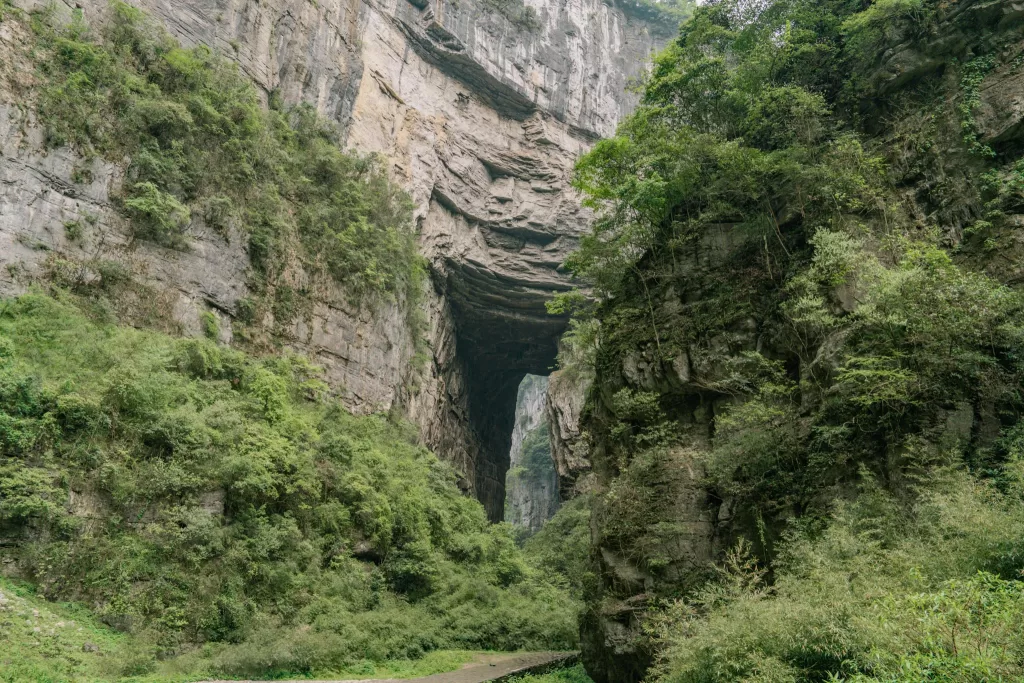
- 🌉 Visit the Three Natural Bridges, a stunning series of massive limestone arches that soar above the gorge (featured in movies like Transformers).
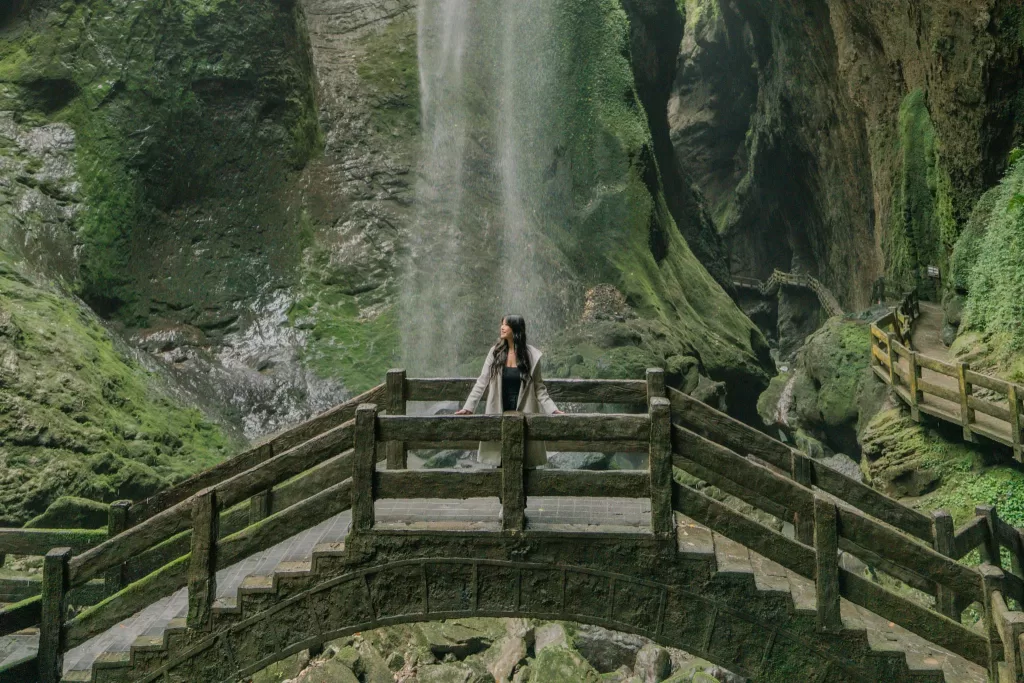
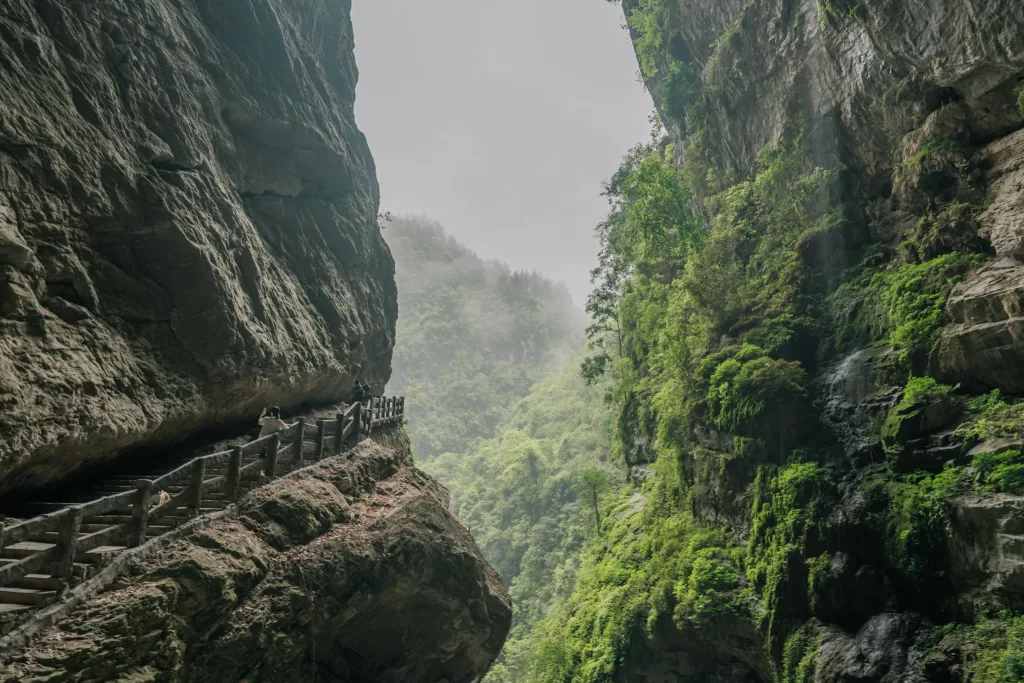
- 🌫️ Hike through Longshuixia Gap, a dramatic canyon filled with steep staircases, mossy cliffs, and misty air—one of the most atmospheric trails in the region.
✨ If you’re staying in Chongqing and want to do a guided day trip, including Three Natural Bridges and Longshuixia Gap, you can book one here on Klook: Wulong Day Trip from Chongqing on Klook
💡 Tip: Wear good walking shoes and pack water since this day includes a lot of stairs!.
📅 Day 2 – Fairy Meadows & Caves (Optional)
If you have more time in Wulong, day two is all about slowing down and soaking in nature—above and below ground.
- 🏞️ Head to Fairy Mountain, a highland meadow with rolling hills, pine forests, and alpine views, often called “China’s Switzerland.”
- 🕳️ If you have time before your train, stop by Furong Cave, one of China’s largest limestone caves, filled with glowing stalactites and surreal underground formations.
- 🚉 Plan your travel to your next city carefully—train service between Wulong and Zhangjiajie is limited, so pre-book your tickets and check departure times in advance.
💡 Tip: Furong Cave is about 30 minutes from central Wulong. Bring a light jacket since it’s cool inside year-round.
🌄 Top Things to Do
From jaw-dropping natural wonders to rich local culture, Wulong offers a mix of adventure, scenery, and tradition. Whether you’re exploring the UNESCO-listed karst landscapes or wandering through nearby Tujia villages, here are the top sights and experiences you shouldn’t miss. You can book all the starred (⭐) spots below on a guided day trip from Chongqing with Klook.
In the Park
- Three Natural Bridges (天生三桥) (⭐): Massive limestone bridges towering over a gorge—this is Wulong’s most iconic sight. Featured in Transformers 4.
- Furong Cave (芙蓉洞) (⭐): One of China’s most spectacular karst caves—ride an elevator deep underground to explore colorful chambers and waterfalls.
- Longshuixia Fissure Gorge (龙水峡地缝) (⭐): A steep, narrow canyon with stairs and catwalks between dramatic cliffs. Cool, shaded, and otherworldly.
- Houping Giant Sinkholes (天坑群): A bit farther out, but absolutely worth it—massive vertical sinkholes surrounded by hiking trails and dense forest.
Nearby Culture & Experiences
- Local Tujia Villages: Explore nearby Tujia communities to experience their unique traditions, stilted wooden architecture, and flavorful local cuisine.
- Cable Cars & Cliff Walks: Some scenic zones offer glass-bottom walkways and short cable rides with panoramic views.
🍲 What to Eat in Wulong
Wulong’s food scene blends spicy Chongqing flavors with hearty mountain dishes and local Tujia specialties. Whether you’re warming up with hotpot or sampling village-style sticky rice, here are a few must-try dishes and where to find them.
| Dish | Description | Spots to Try |
| 🌶️ Spicy Wulong Hotpot | A local take on Chongqing-style hotpot—bold, numbing, and packed with chilies and peppercorns. Often served with tripe, duck blood, and tofu. | Seven Immortals Pavilion • Jinchan Cave (七仙阁•津蟾洞) |
| 🥩 Cured Bacon Dishes (腊肉) | Smoky, salted pork cured and stir-fried with garlic, green peppers, or seasonal greens | Thick Grain Home (ShanzhenYangsheng Soup Store) (粗粮人家 (山珍养生汤店)) |
| 🍚 Tujia-Style Sticky Rice | Glutinous rice steamed in bamboo or lotus leaves, often mixed with sausage, beans, or local herbs | Village restaurants and homestays |
🗓️ Best Time to Visit
Wulong’s dramatic landscapes are beautiful year-round, but certain seasons offer better weather, fewer crowds, and more enjoyable hiking conditions. Here’s a quick guide to help you plan the best time for your visit.
- Spring (March–May): Lush greenery and blooming wildflowers make this one of the most scenic times to hike through the Three Natural Bridges and Longshuixia Gap. Mild weather and fewer crowds are a bonus.
- Autumn (September–November): Clear skies, colorful foliage, and crisp air create ideal conditions for sightseeing and photography. It’s the best season for hiking and avoiding peak tourist traffic.
🚫 Avoid: Summer (June–August) brings heat, humidity, and afternoon rain, which can make hiking slippery. Also, avoid Golden Week (Oct 1–7) and Chinese New Year, when crowds surge and accommodations fill up quickly.
🛍️ Where to Shop
While Wulong is best known for its natural beauty, you’ll also find a few great spots to pick up local products and souvenirs. From mountain herbs and handmade crafts to unique Tujia items, here’s where to look out for on your trip!
- Local Markets in Wulong Town: Great for dried mushrooms, handmade crafts, and herbal teas.
- Souvenir Shops at Scenic Entrances: Photo books, postcards, wood carvings, and Tujia handicrafts.
- Farm Stalls: Pick up local chili oil, preserved veggies, and mountain honey to bring home.
💡 General Tips for Visiting Wulong
Wulong is one of China’s most underrated natural gems—but its vast landscapes and rural setting mean a bit of prep goes a long way. Here’s what to know before you go:
- Bring your passport – You’ll need it to purchase entry tickets at the Wulong Tourist Center and for train travel.
- Wear good walking shoes – The parks involve steep staircases, narrow paths, and slippery canyon trails—comfort and grip are key.
- Pack snacks and water – Food options near the scenic areas are limited. Stock up before entering the parks, especially for Longshuixia Gap.
- Arrive early – Attractions like the Three Natural Bridges and Fairy Mountain can get crowded by mid-morning, especially on weekends and holidays.
- Use the shuttle buses – Most scenic areas are accessed by park-operated shuttle buses from the Wulong Tourist Center—build in time for transfers.y.
- Check train schedules in advance – Train service to and from Wulong is limited and often seasonal. Book early and double-check departure times, especially if heading to Zhangjiajie.
- Didi/taxi drivers may charge extra – When traveling between Wulong Train Station and the Tourist Center, most drivers requested an additional fee (we think we generally paid around 20–30 RMB). One quoted us 200 RMB more than what was listed on Didi, so don’t hesitate to reject overpriced rides and try for another.
🧳 Final Thoughts: Is Wulong Worth Visiting?
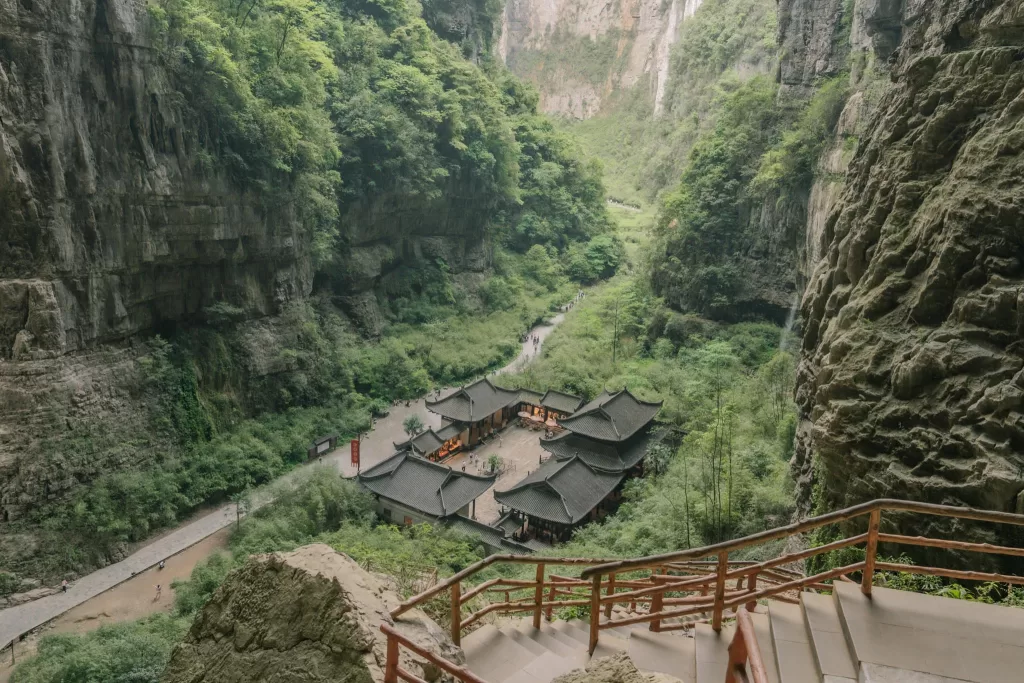
Wulong Karst National Park might not be on every traveler’s radar, but it absolutely should be. With its towering stone bridges, mist-filled canyons, glowing caves, and quiet alpine meadows, it’s one of China’s most dramatic natural landscapes—and still feels like a hidden gem.
It does take some planning since train schedules are limited, signage is mostly in Chinese, and getting around requires a bit of patience, but the payoff is huge. From the moment you step into the gorge beneath the Three Natural Bridges to the peaceful trails of Fairy Mountain, Wulong offers the kind of scenery that feels pulled from a movie set.
If you’re heading west to east across China, Wulong is a perfect nature escape to pair with city stops like Chongqing or Zhangjiajie. It left us amazed, refreshed, and grateful that we made the extra effort to go.
— Angelia & Chris